The first one
Scriptor is a writing community. People post quotes, short stories, novels and
poems; other people read them; an admin panel moderates users and content. Java,
39 source files, minSdk 19, targetSdk 30.
Its first commit is dated 2021-09-22 and reads SEIAM V 1.0. There are four
commits in total, and the last of them is a README added in 2024 — three
years after the code. There is no incremental history because there was no
incremental development. I built it, then pushed it.

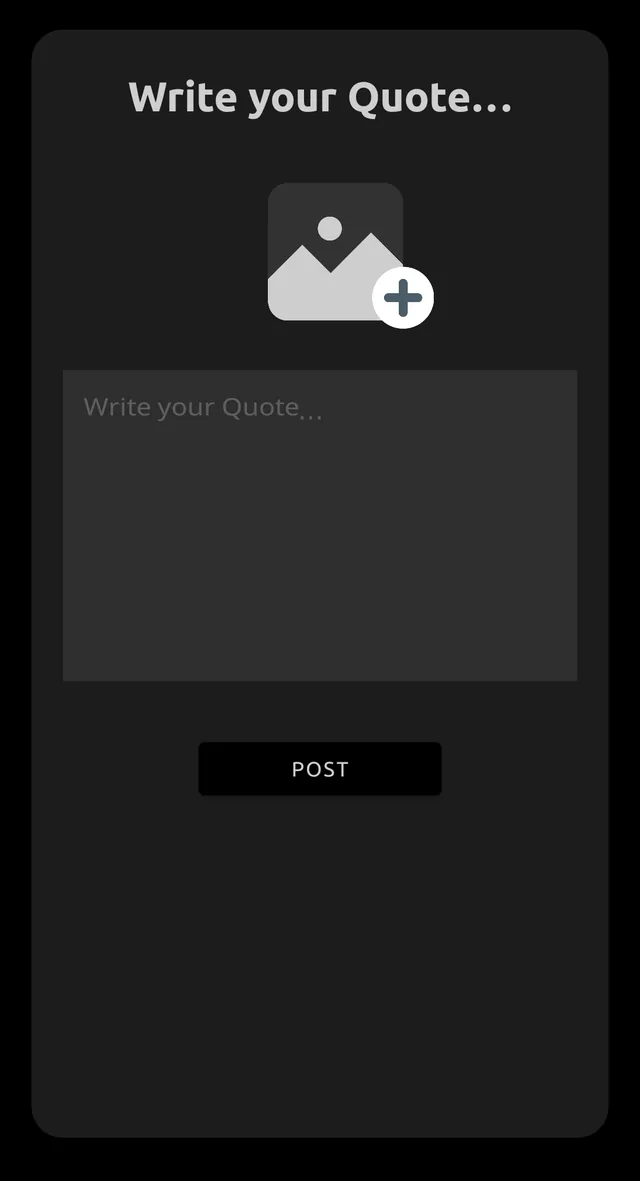
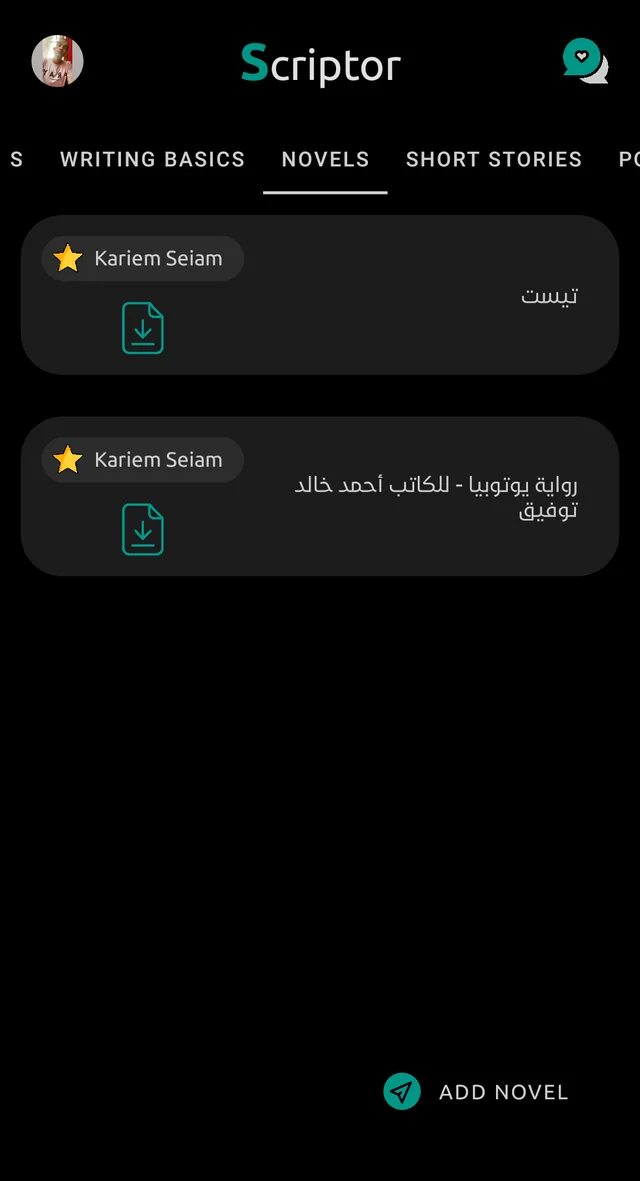


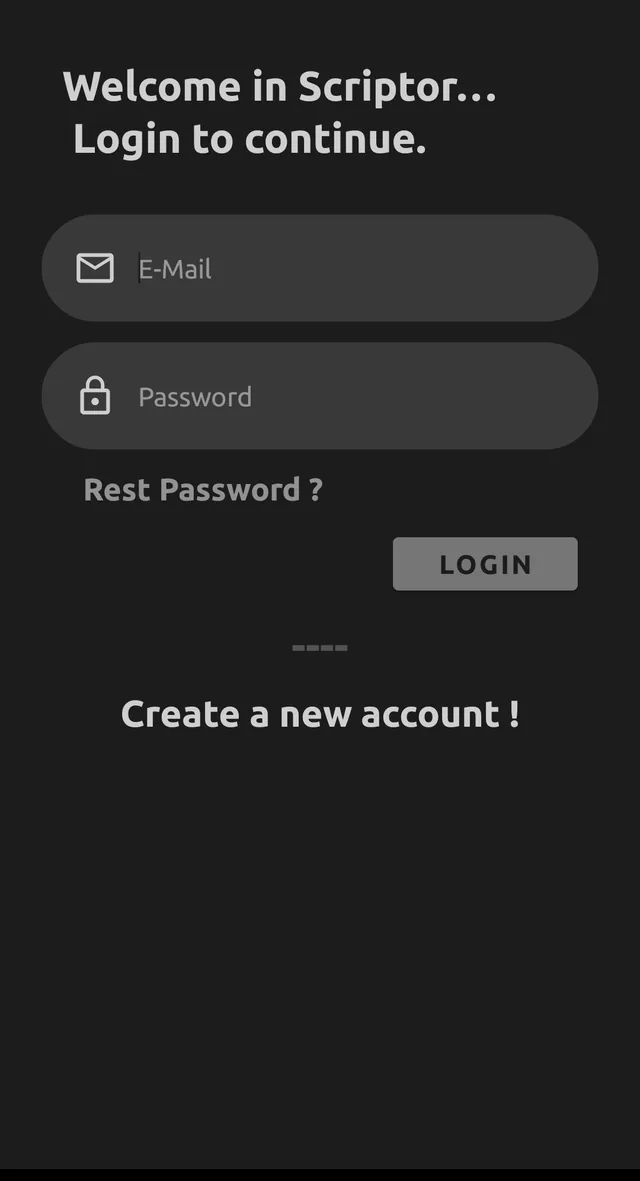
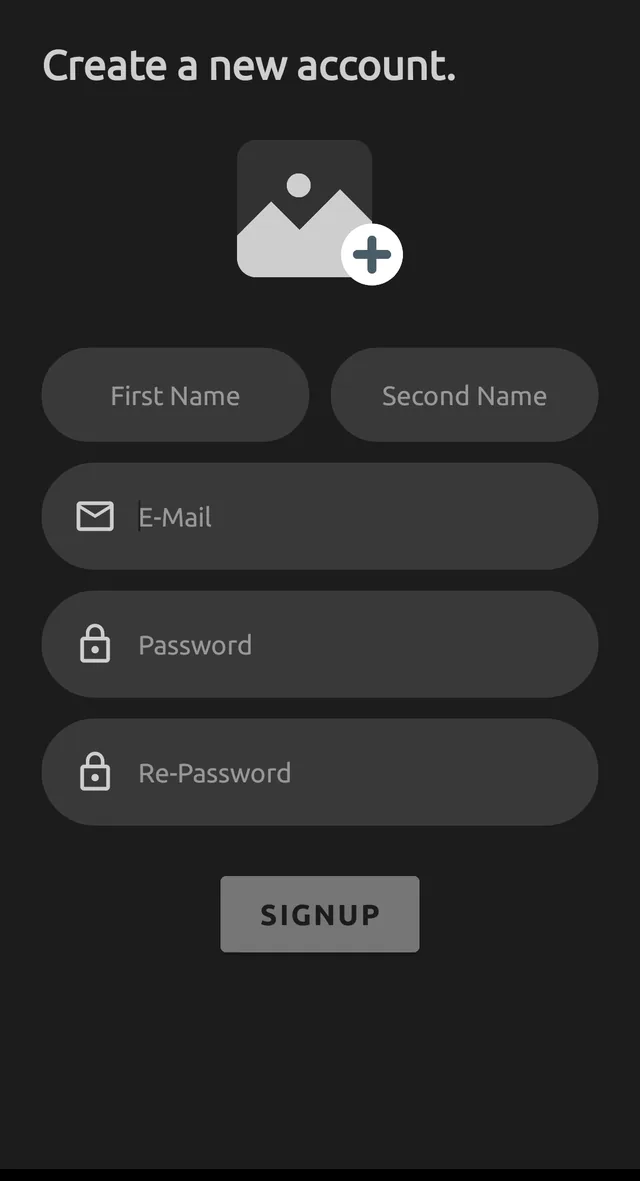
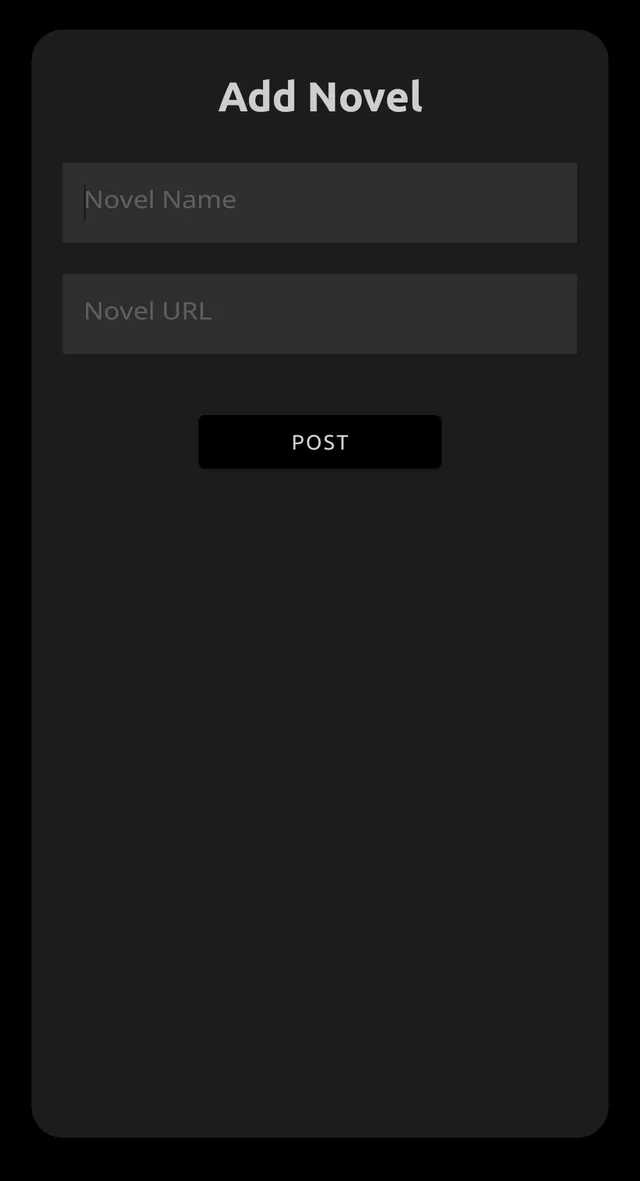
The real app, 2021 — untouched screenshots, cropped to drop the Android chrome. Not a live app anymore, so this is what shipped, not a rebuild of it.
Two databases, one confusion
The dependency block is the most honest documentation this project has:
implementation 'com.google.firebase:firebase-auth:21.0.1'
implementation 'com.google.firebase:firebase-database:20.0.1'
implementation 'com.google.firebase:firebase-storage:20.0.0'
implementation 'com.google.firebase:firebase-firestore:23.0.3'
Realtime Database and Firestore, declared four lines apart, for overlapping jobs.
Those are two different databases with two different data models and two different pricing models. Google’s own documentation opens by telling you to choose. Having both is not a wrong choice between them — it is not knowing a choice existed.
No layer of any kind
There is no ViewModel, no repository, no data layer, no interface between the
screen and the network. MainActivity.java is 8,350 bytes and talks to Firebase
directly. auth/SignUp.java is 7,112 bytes and talks to Firebase directly. So
does every screen under sections/ — quotes, novels, short stories, poems — and
every tab of the admin panel under cpanel/.
The package structure is genuinely organised by feature, which is the one thing
the project gets right: sections.quotes, sections.novels,
cpanel.tabs.users, cpanel.tabs.feedback. The folders are sensible. What is
inside them is an Activity holding the whole feature.
What it actually proves
Not skill. Breadth of appetite: four content types, user profiles, a feedback system and a moderation panel, from someone who had not yet learned what a repository pattern was for.
The README added in 2024 describes “Firebase Mastery” and “Advanced Android Development”. That is retrospective marketing written three years later by someone who wanted the project to be more than it was. The code is the truthful record, and the code says: this is where I started, and I did not know what I did not know.
Everything I have built since is measured from here.